25 Oct 2026
Spotlighting Overlooked Influences in Retro Resource Networks Across Decades

Resource networks built around retro computing systems have drawn from a wide range of overlooked contributors across multiple decades, and these elements continue to shape how vintage hardware and software archives operate today. Early file exchange protocols such as XMODEM and YMODEM emerged in the late 1970s, yet many regional adaptations in Europe and Asia receive less attention despite their role in sustaining access during periods of limited connectivity. Observers note that these protocols often incorporated local modifications that improved reliability on noisy telephone lines common in certain areas.
Foundations in the 1970s and 1980s
Bulletin board systems formed the backbone of early resource sharing, and data from the Computer History Museum indicates thousands of active nodes by the mid-1980s across North America alone. Researchers at institutions like the University of Toronto have documented how academic computing clubs extended these networks into educational settings, allowing students to exchange utilities and documentation that commercial channels ignored at the time. And while major urban centers hosted teh most visible nodes, rural operators maintained smaller systems that preserved niche collections of agricultural software and engineering tools.
Regional Adaptations and Hidden Contributors
Networks in Australia and Canada developed distinct practices for handling bandwidth constraints, according to reports from the National Library of Australia on digital heritage projects. These practices included compressed archive formats tailored to slower links, and they influenced later global standards more than commonly recognized. Women programmers working in government labs during the 1970s contributed encryption routines and indexing methods that supported secure resource transfers, though their names rarely appear in mainstream histories of the period.
Expansion Through the 1990s
Usenet newsgroups and early internet service providers expanded the reach of retro resource networks, yet the transition period introduced new challenges around compatibility and preservation. Studies from the European Commission on digital preservation show that many European hobbyist groups maintained parallel systems using FidoNet technology well into the decade, bridging gaps between dial-up communities and emerging web-based archives. This dual infrastructure allowed continued access to older games and utilities even as commercial platforms shifted focus to newer releases.
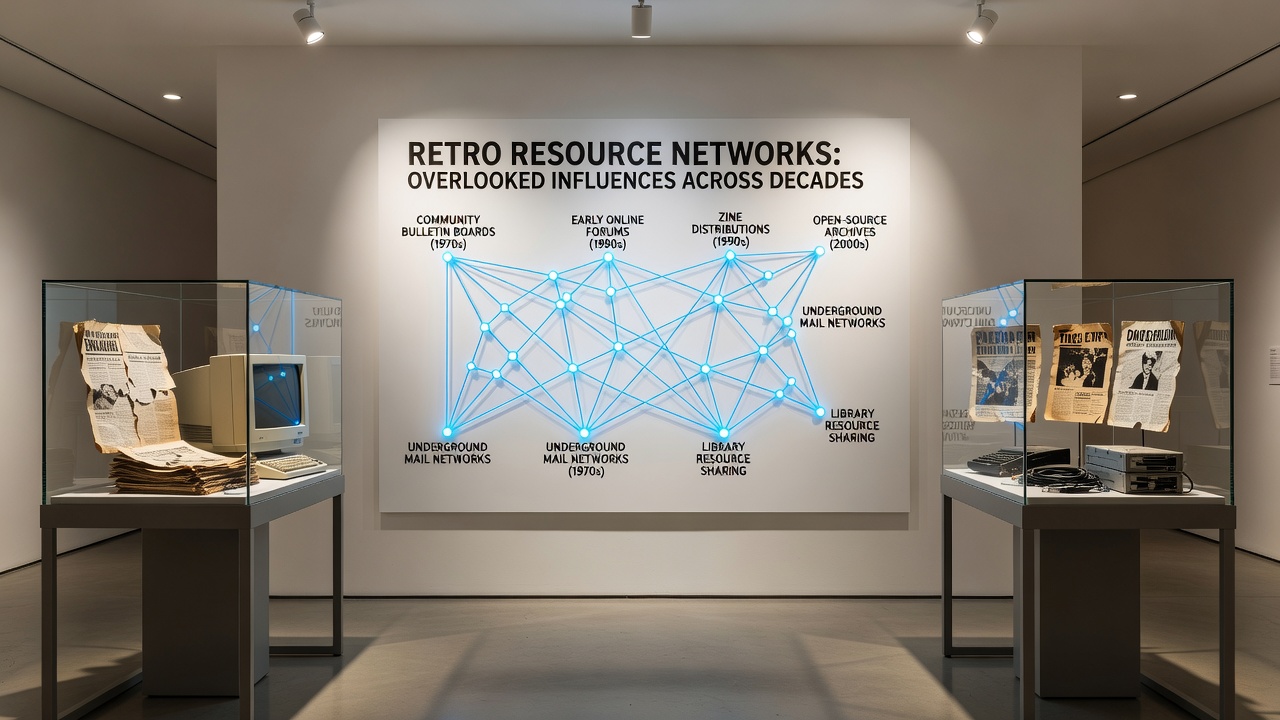
Trade organizations such as the Software Publishers Association tracked distribution patterns during this era, and their records reveal how independent developers relied on shareware networks to reach audiences outside traditional retail channels. Those who studied these patterns found that certain Eastern European collectives adapted Western protocols to local hardware constraints, creating hybrid resource pools that later fed into international preservation efforts.
Influences Extending Into the 2000s and Beyond
By the early 2000s, web forums and dedicated archive sites began to consolidate many fragmented collections, while academic initiatives continued to highlight previously neglected sources. Data from ongoing projects at the Library of Congress digital collections demonstrates steady growth in catalogued retro materials, including documentation from non-English language communities. Events planned for October 2026 at several university computing centers will examine these archives through the lens of global participation rather than dominant Western narratives.
Industry reports from the IEEE Computer Society further illustrate how open-source tools developed in the 1990s supported migration of legacy files into modern formats without loss of functionality. Observers tracking these developments point to contributions from Latin American user groups that maintained specialized repositories for embedded systems and industrial control software, areas often sidelined in broader discussions.
Conclusion
Retro resource networks across decades reflect a cumulative set of technical choices, regional adaptations, and individual efforts that extend well beyond the most publicized milestones. Continued examination of archival records and cross-regional studies provides clearer insight into the full scope of these influences, and projects scheduled through 2026 and onward will likely add further detail to this evolving picture.